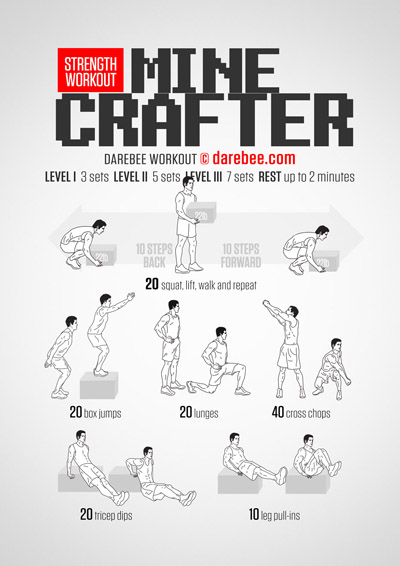
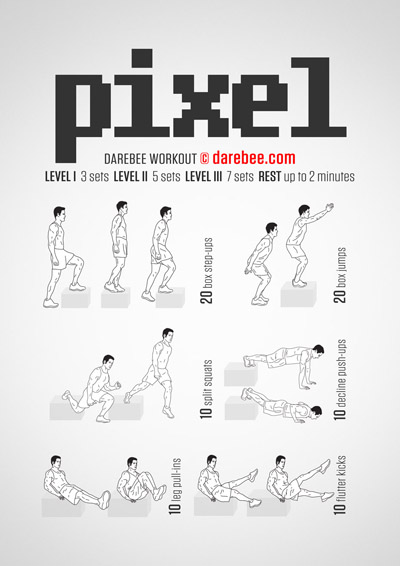
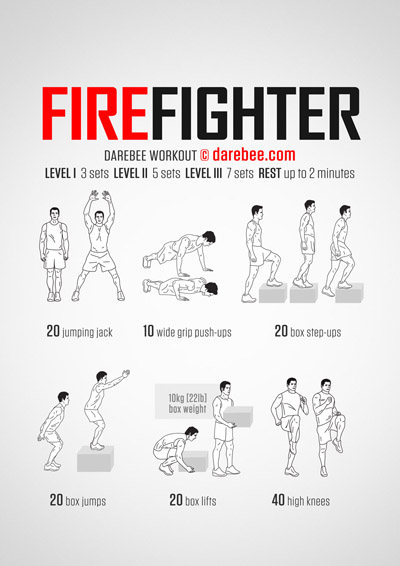
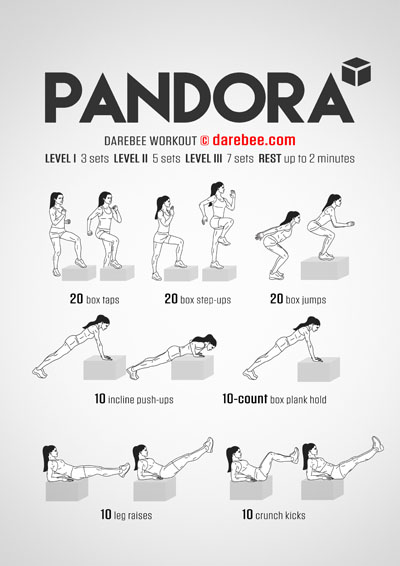
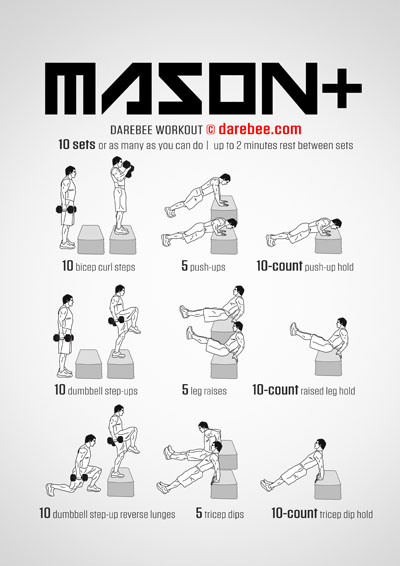
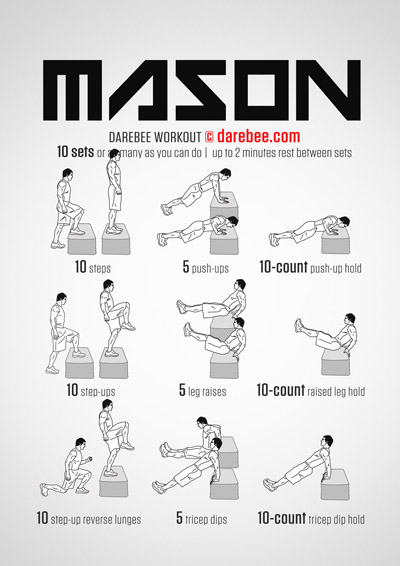
This collection is built around one simple idea: turn a sturdy box, step, or bench into a programmable tool for strength and conditioning. The workouts revolve around stepping patterns (step-ups, taps, reverse-lunge step-ups), power drills (box jumps), and tempo-driven footwork that keeps the legs and lungs working together, then layer in floor and support work using the box to change leverage, like incline or decline push-ups, plank holds with hands elevated, triceps dips, and core moves that use the box for positioning (raised-leg holds, controlled tucks, and kick-through style reps). You will move between short clusters of exercises with minimal fuss, mixing crisp reps with occasional holds where the goal is to stay locked in and stable rather than chase speed. An exercise box is required, and a few workouts add load with a weighted box or dumbbells.
The payoff is a very practical blend of athleticism and joint control: stronger quads, glutes, and calves from repeated knee and hip extension, better single-leg stability from constant weight shifts, and improved ankle-knee tracking because every rep asks you to land, stabilize, and drive again. The box height also forces cleaner mechanics and more honest range, which is why these sessions tend to build “usable” power, not just fatigue, by training the stretch-shortening cycle in jumps and the slow-control side of strength in step-ups, holds, and leverage-based pushing. Add the elevated planks and dips and you also get shoulder stability and scapular control under load, while the core work reinforces a more stacked ribcage-pelvis position so your torso stops leaking energy when your heart rate climbs. Over time it feels like better coordination, stronger legs that don’t quit on stairs, and a body that can produce force and stay organized at the same time.