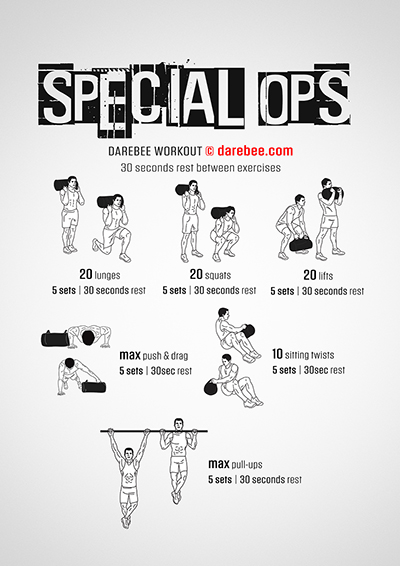
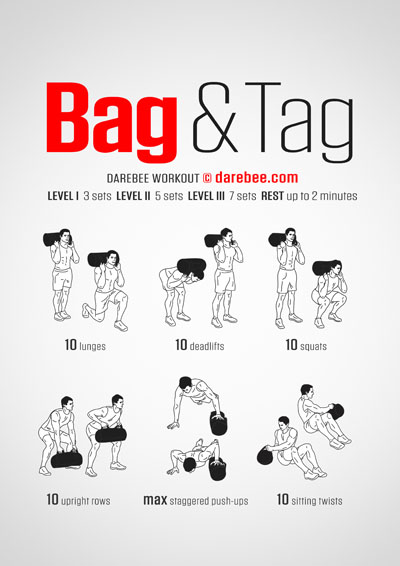
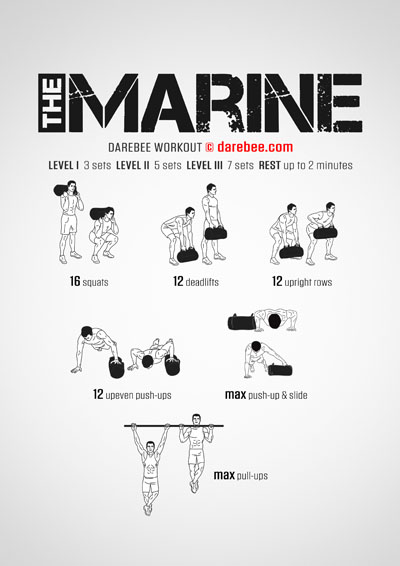
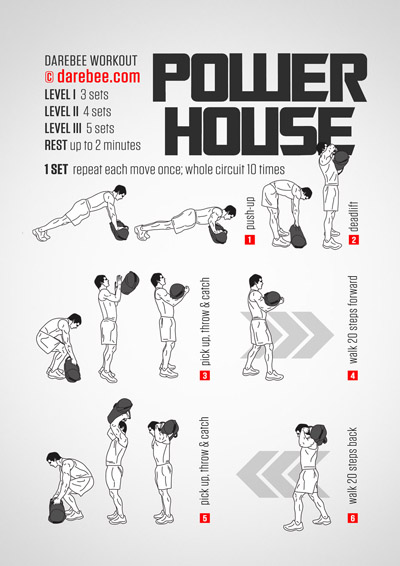
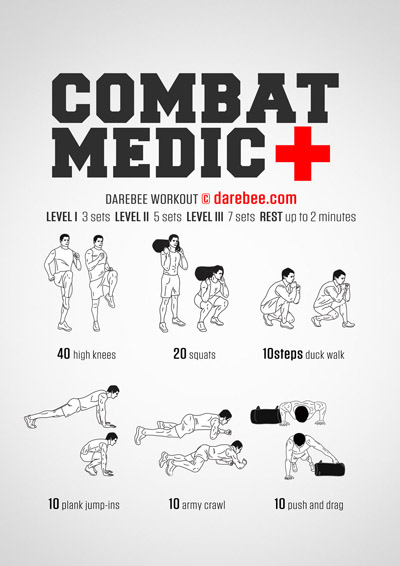
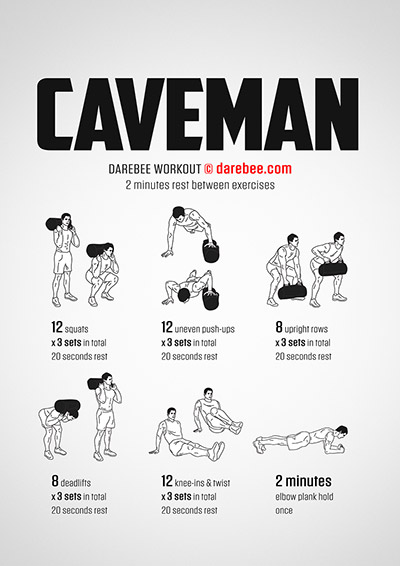
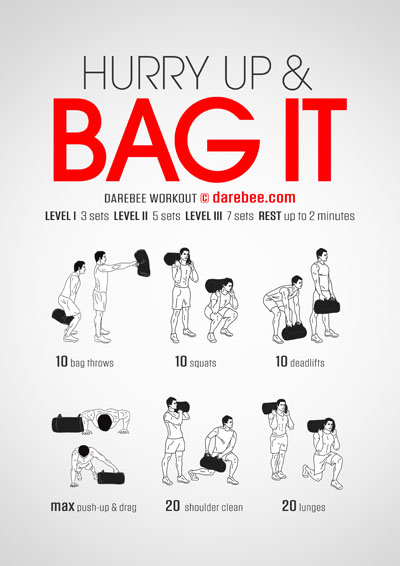
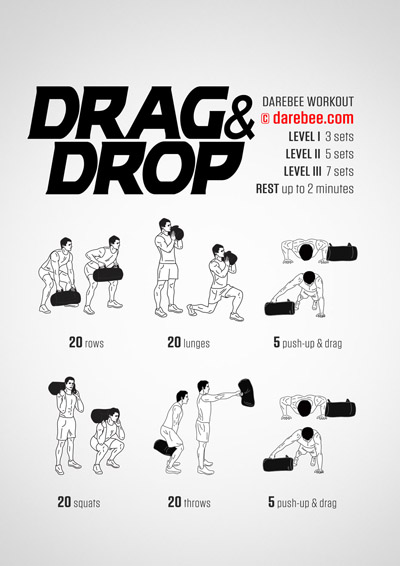
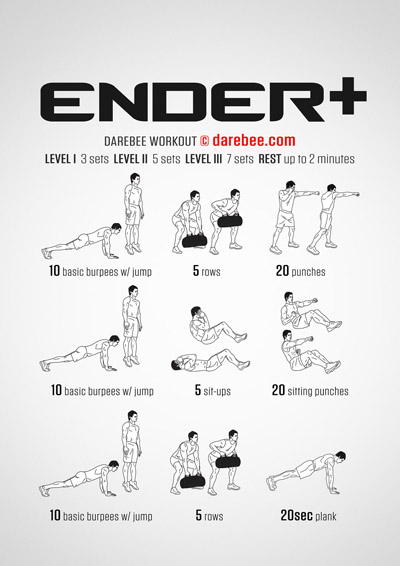
This collection is built around one wonderfully uncooperative tool: a sandbag that shifts, sags, and forces you to brace harder than “clean” weights ever do. The workouts keep the programming simple and physical, then make it demanding through awkward loading, density, and full-body sequencing: hinging and squatting under load, lunging and shouldering patterns, rowing and upright-row pulling, plus throws and catches when you have the space and the confidence to move the bag with intent. You also get plenty of “ground truth” work where the sandbag turns standard bodyweight into a wrestling match: staggered or uneven push-ups, push-and-drag variations, crawls, plank holds, knee-ins, twists, and sit-up style core work that keeps the trunk switched on while the limbs do the heavy lifting. The pacing spans from set-and-rest grinders (with longer rests and crisp reps) to faster, conditioning-biased circuits that pair loaded strength with locomotion and quick transitions, including at least one session designed to be done in a short corridor so the workout becomes both load and movement. And there’s range in difficulty: one of the sessions is explicitly positioned as not beginner-friendly, while others scale cleanly by sets/levels and by how heavy you make the bag.
The benefits are exactly the ones sandbag training tends to hand out (sometimes rudely): stronger bracing and midline endurance, better posterior-chain strength from repeated hinge work, tougher grip and upper-back stamina, and a kind of conditioning that feels practical because it’s built on picking up, carrying, dragging, and controlling a load that won’t stay politely centered. You’ll also notice “athletic control” improvements because several workouts blend strength work with movement drills (high knees, duck walks, crawls, burpees, strikes), so coordination has to stay online even when breathing gets loud. .