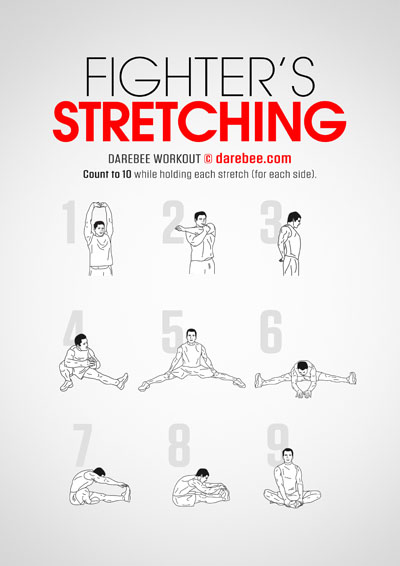
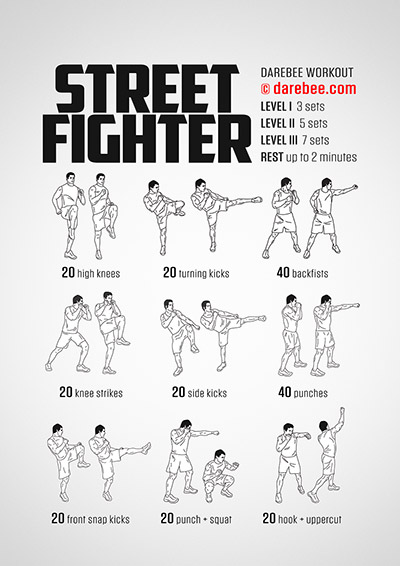
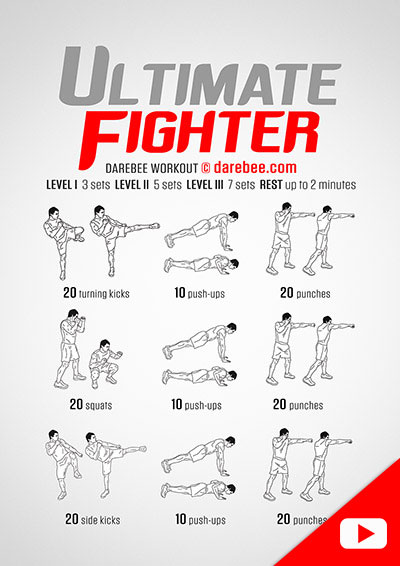
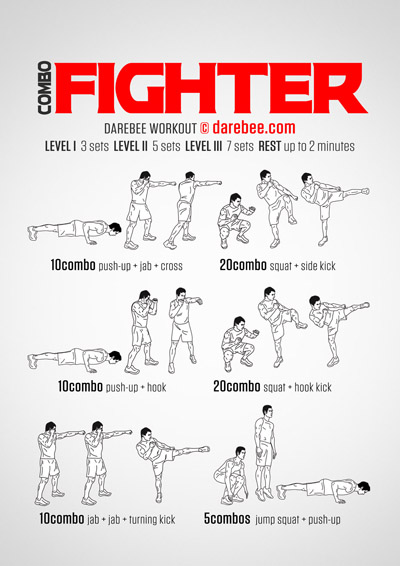
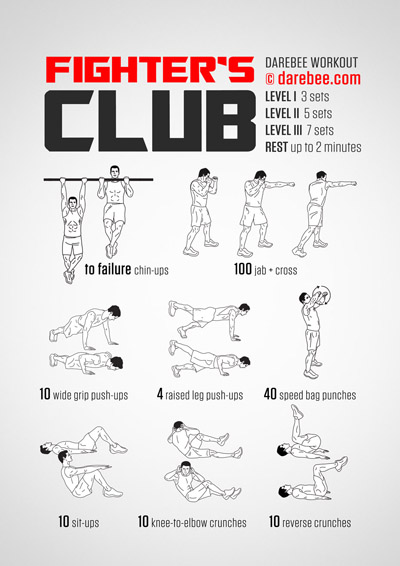
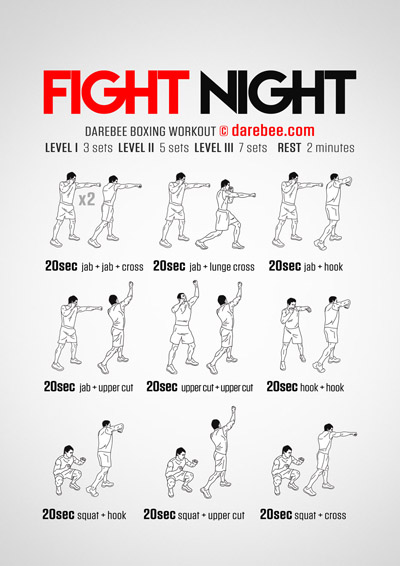
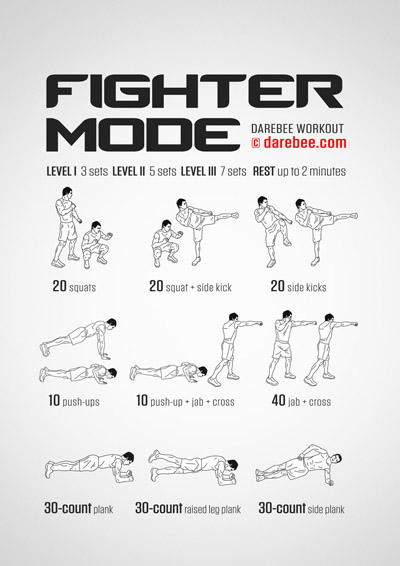
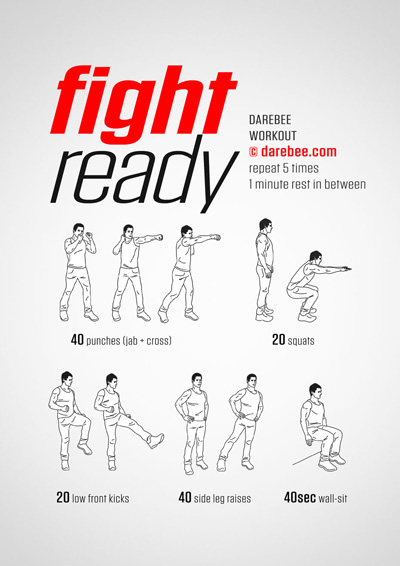
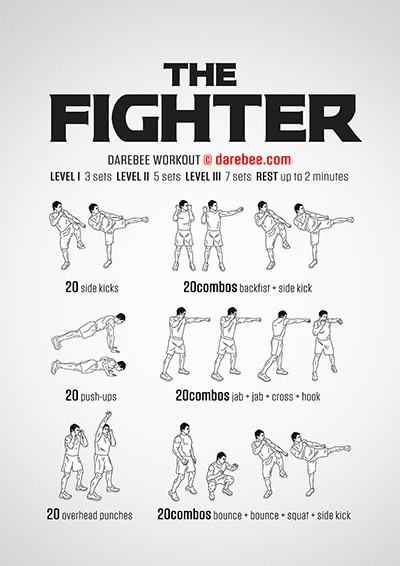
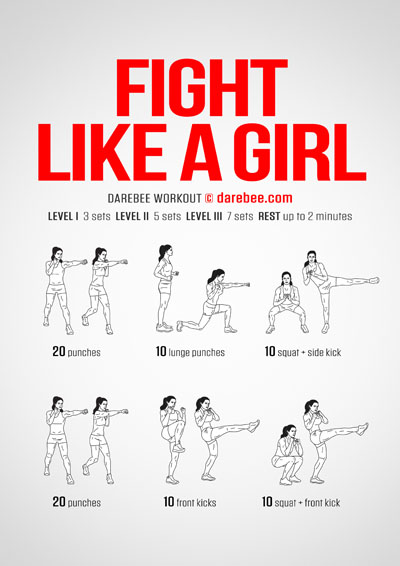
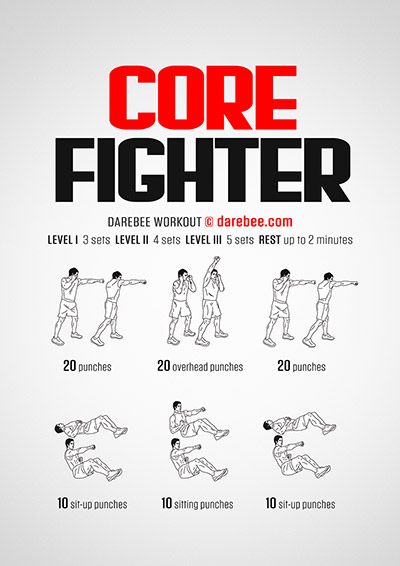
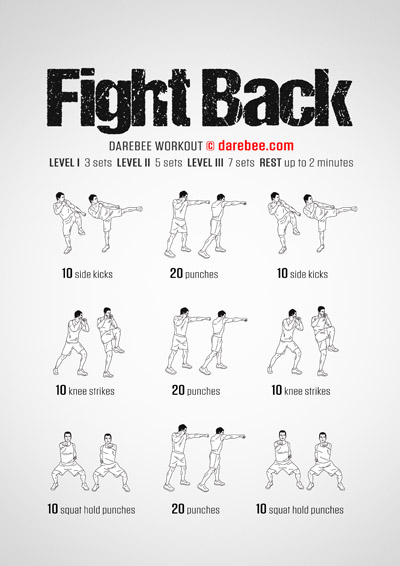
This collection is built like a fighter’s training week distilled into printable pages: a short prep sequence, multiple conditioning sessions that blend striking mechanics with full-body strength, and a dedicated cooldown to keep everything moving well. The warm-up is a quick rhythm-builder that rehearses light footwork, upper-body striking paths, trunk rotation, and low-impact lower-body patterns so you’re coordinated before intensity ramps up. The main sessions then vary the “engine settings” on purpose: some are clean, rep-based circuits that alternate striking volume with lower-body strength and floor-based work; others are combo-driven, where movement chains force timing and sequencing rather than random fatigue. You’ll also see a round-style format that uses timed intervals to mimic the feel of working in bursts, plus a minimalist repeat structure meant to be done multiple times with short, predictable breaks. Across the posters, the scaling stays consistent: most sessions use three difficulty tiers by increasing total work, with clear rest guidance so it reads like a simple training plan instead of a dare.
The benefits are “fight fitness” without needing equipment or contact: better coordination under fatigue, stronger posture and shoulder endurance, improved rotational control through the trunk, and cardio that gets trained in repeatable bursts rather than long, slow output. Because the work constantly asks you to stay organized while your breathing climbs, you’re practicing the skill of staying sharp when tired, which carries into any sport or strength plan where form usually collapses first. There’s also a deliberate bias toward midsection capacity: one session is explicitly centered on trunk output and control, while others layer bracing into nearly every round through stance changes, direction shifts, and upper-body rhythm work. The higher-demand entries add extra upper-body fatigue and “keep-going” volume, which builds resilience in the grip-to-shoulder chain and makes your overall work capacity feel tougher and steadier over time. Finally, the stretching page closes the loop with a simple sequence aimed at restoring range after all that rotation and stance work, making the collection easier to repeat week after week without feeling wound up.